Today we’re going to tell you the story of Emil Jannings, a German actor who began his career in silent cinema, won several awards, and was the first to receive a golden statuette from the academy, yes indeed, he was the inaugural Oscar winner in history. Sadly, after the evolution of cinema and the advent of voices in film, the actor decided to distance himself from Hollywood, heading back to German lands and restarting his career, albeit this time in Nazi propaganda films, which he both starred in and produced.
The Oscars
They are the most prestigious awards in the industry, recognizing the best of cinema and television, organized by the Academy of Motion Picture Arts and Sciences. The first Oscars ceremony was held on May 16, 1929, over 90 years ago, but previously, winners were announced three months before the event, unlike now where we know the winners on the same day. Previously, actors could be recognized for films released at least 2 years before and even for more than one film.

Emil Jannings
Emil Jannings was the inaugural Oscar winner for Best Actor. A Swiss-born, naturalized German actor, he won for his roles in films like The Way of All Flesh (1927) and The Last Command (1928). Jennings didn’t receive the statuette at the ceremony held in the Blossom Room of the Roosevelt Hotel in Hollywood; he had to travel to Germany. Thus, Paramount’s publicity department took a photo of him holding the statuette beforehand.
Today, he’s remembered as the first Oscar-winning actor, but also as a Nazi sympathizer close to Hitler, even claimed to be Hitler’s favorite actor. Emil Jannings even rose to a high position in Joseph Goebbels‘ Ministry of Propaganda.
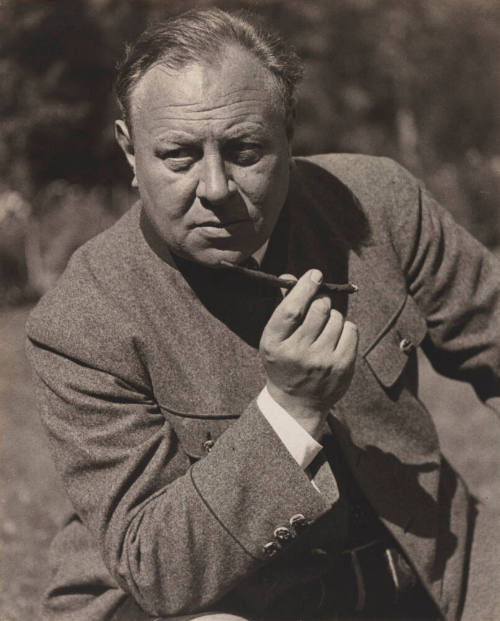
After his father’s death, he and his mother moved to Germany, where Emil started his acting career. In 1927, Paramount Pictures noticed his talent and offered him a contract allowing him to choose directors, characters, and even modify scripts – a dream for any lover of the seventh art. However, things took a downturn when cinema transitioned to sound, and Emil no longer fit the profile of the favored actor, according to Paramount due to his pronounced German accent.
Consequently, after winning the Oscar, he returned to Germany, where Hitler was rising to power. When Adolf established his reign of terror, he placed Goebbels in charge of the Reich Ministry of Propaganda, and it was then that Emil Jannings was considered for participation in Nazi propaganda films. Later, the actor also gained artistic freedom in filmmaking and produced some movies like Ohm Krüger (1941), which Hitler adored. Thanks to his work, Goebbels appointed Jannings “State Artist” and awarded him the Ring of Honor of German Film.
His talent was undeniable, and that same film impressed another dictator of the time, Benito Mussolini, leading the film to win the Mussolini Cup for Best Foreign Film at the 1941 Venice Film Festival.

Retirement and Death
After World War II, he retired to Austria. In an interview, according to the Chilean newspaper La Tercera, the actor claimed he was coerced into making those films. He had his star on the Hollywood Walk of Fame until 1960, and in his Swiss hometown, they also sought to honor him with a replica star, although the replica was removed due to several protests. Jannings’ name was removed from the official Oscars winners‘ page, and the actor died of cancer on January 2, 1950.