We have reason to believe that Jesus Christ did not exist, at least as the divine figure that everyone believes He was; hundreds of scientists and historians around the world have endeavored to give him a face and demonstrate his stay in this world, not as a god, but as an important figure in the history of the world.
An example of this is the work of the former professor of the University of Manchester, Richard Neave, based on different skulls collected throughout Galilee and some parts of Israel, managed to make an approximation of how the real face of Jesus must have been, away from the image of the blond and light-eyed guy to which we are accustomed.
 In any case, even if we had a body or nails stained with his blood, we would still doubt his existence. But that is not a really serious or alarming matter; for even his disciples doubted him at every step he took. It is not necessary to have an extensive knowledge of the Bible to know that Peter – to whom Christ entrusted the control of his Church – was one of the apostles who most questioned his master, challenging him even to walk on water. However, the real burden of doubt was laid on St. Thomas.
 Christ had promised his followers to resurrect on the third day and of course, after having walked on the sea, multiplied fish and brought back to life other people besides Lazarus, who could doubt his word? According to the biblical account, only Thomas thought it was a hallucination or something like that; such things do not happen every day, but His master, with a smile on his face, asked him to put his finger in the wound at his side.
 This scene, which is one of the greatest displays of faith in the Gospels, was painted by Michelangelo Merisi da Caravaggio in 1602, as part of a commission from the Giustiniani family. These bankers were confident that the artist was the only one capable of portraying this scene from the Gospel of St. John with all the seriousness that was needed.

Thanks to the chiaroscuro of his paintings, the scene portrayed in this painting acquires an air between solemn and somber, worthy of one who has just returned from death before the eyes of those who saw him die. What distinguishes it from other works of sacred art of the time is that Caravaggio knew how to exploit the realism that characterized his paintings to make this painting a much more sincere picture. First of all, neither the apostles nor Christ have that halo of divinity that surrounded their heads, they are humble people who look incredulously at a miracle.
The clothes of the apostles confirm their lack of privileges and the main reason why they were chosen to follow the Messiah: their undoubted humility, which is not only reflected in their clothes, but also in the wrinkles of their faces tanned by hard work and the long walks they underwent after having decided to follow in Christ’s footsteps.
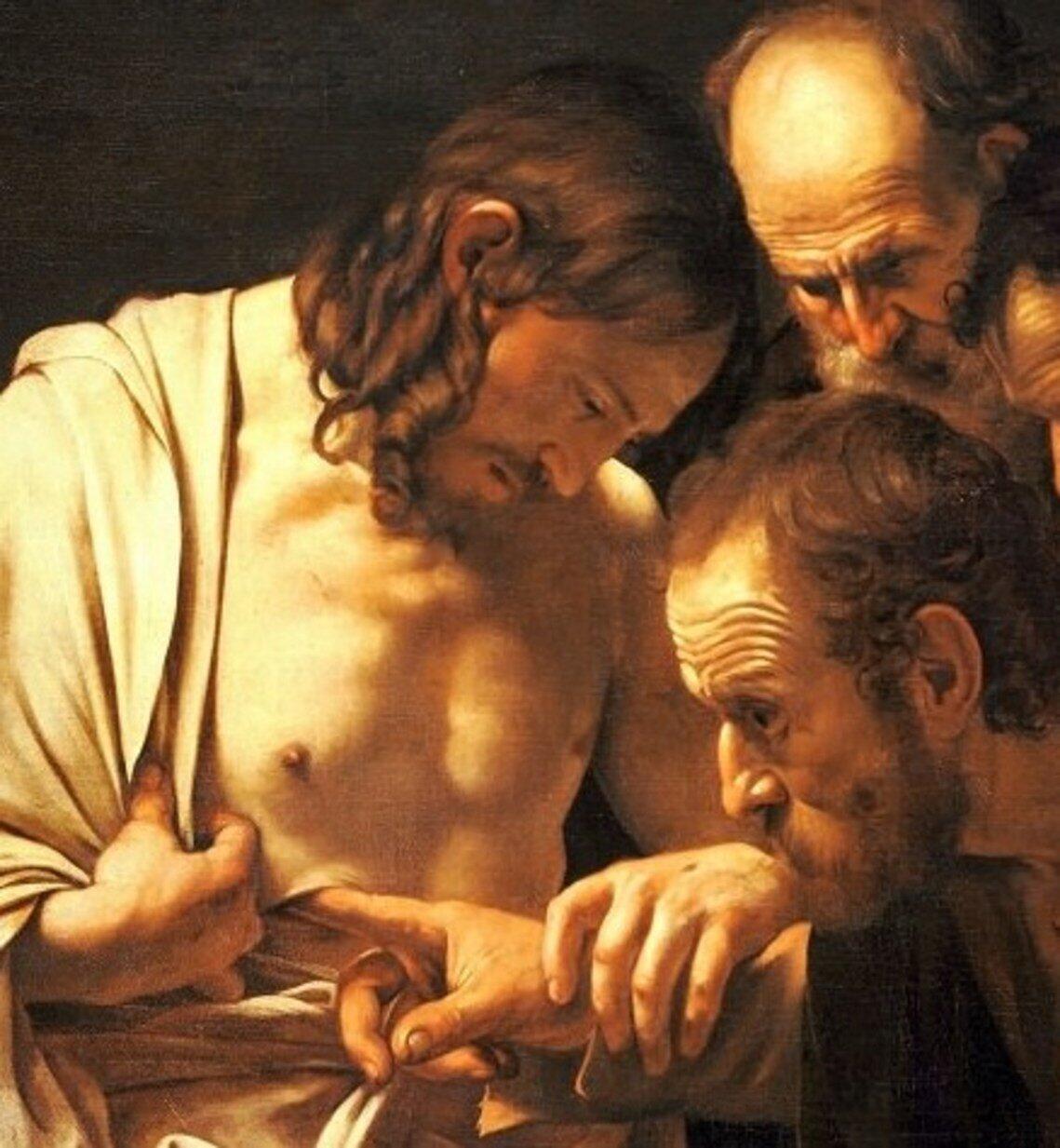 Not even Jesus himself is presented as the typical triumphant messiah who has just defeated death; he still shows signs of having been beaten; his hair is matted like someone who has been inside a tomb. Even his face shows signs of tiredness; reminding us that far from being a god or having any other divine characteristic, he was a human being in whom a whole group of people place their faith every day, and that is exactly what makes him exist as a historical character and as the guide of millions of souls around the world.
This story was originally published in Spanish by Cultura Colectiva.